অগ্রিম ছাড়াই অর্ডার করুন
অর্ডারের পর, ডেলিভারির সময় আমাদের প্রোডাক্ট দেখে মূল্য পরিশোধের সুযোগ রয়েছে।


3,300.00৳ Original price was: 3,300.00৳ .3,000.00৳ Current price is: 3,000.00৳ .
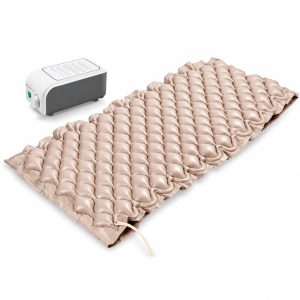
For any patient spending more than 15 hours a day in bed, the Easy Air Mattress Pressure is one of the most important preventive devices a caregiver can have. It uses an alternating pressure system — the pump automatically inflates and deflates different sections of the mattress in a continuous cycle — to ensure no single pressure point on the patient’s skin remains compressed long enough to cut off blood supply and cause a bedsore. The pump is ultra-quiet, manually adjustable for different patient weights, and the entire system fits over any standard hospital or home bed. Every connecting pipe is replaceable, making long-term maintenance straightforward.
| Attribute | Detail |
|---|---|
| Brand | Easy Air Mattress |
| Type | Alternating pressure anti-bedsore mattress |
| Pump system | High-efficiency, low-loss, ultra-quiet |
| Pressure adjustment | Manual — adjustable for different patient weights |
| Mattress material | Medical-grade PVC (non-toxic) |
| Pipe system | Every pipe individually removable and replaceable |
| Mounting | Convenient hook — fits standard hospital and home beds |
| Power | Electric pump (220V) |
| Suitable for | Low, medium, and high-risk bedsore patients |
| Best used alongside | Hospital bed or standard double bed |
| Price | ৳3,000 (standard) / ৳3,400 (Pressure Guard with pump) |
অর্ডারের পর, ডেলিভারির সময় আমাদের প্রোডাক্ট দেখে মূল্য পরিশোধের সুযোগ রয়েছে।
Easy Air Mattress Pressure Price Bangladesh, How It Actually Works, Who Actually Needs It, and What Nobody Else Tells You.
Every product listing for this mattress says “prevents bedsores.” Almost none of them explain how or which patients it’s actually critical for, versus which patients it’s optional for. This page fixes both of those gaps.
A bedsore (pressure ulcer) forms when sustained pressure on a bony prominence — tailbone, heels, hips, shoulder blades — cuts off blood supply to the skin and underlying tissue for long enough that the tissue begins to die. The clinical threshold is generally around 2 hours of unrelieved pressure at a single point.
The Easy Air Mattress Pressure prevents this through alternating pressure — the pump inflates and deflates different sections (cells) of the mattress in a repeating cycle. This continuous shift means no single area of the body remains under maximum pressure for long enough to cause tissue damage. The cycle repeats every few minutes throughout the night and day, automatically, without requiring the caregiver to manually reposition the patient.
This is fundamentally different from a foam mattress or a static air mattress — neither of those actively redistributes pressure. They may be softer, but they don’t prevent bedsores in truly immobile patients.
Not every bedridden patient has the same bedsore risk. Understanding which category your patient falls into helps you choose the right device.
Low-risk patients can reposition themselves somewhat, spend less than 15 hours a day in bed, and have intact skin with no existing pressure sores. For these patients, a quality foam mattress with regular repositioning may be sufficient — an alternating pressure mattress is a useful addition but not critical.
Medium-risk patients have limited mobility, spend most of the day in bed, and may have early-stage skin redness at pressure points. For these patients, an alternating pressure mattress like the Easy Air Mattress Pressure is strongly recommended — it dramatically reduces the caregiver’s repositioning burden and actively protects skin integrity.
High-risk patients are fully immobile, spend 24 hours in bed, and may already have existing skin breakdown or pressure sores. For these patients, alternating pressure is not optional — it’s essential. The Easy Air Mattress Pressure is designed specifically for this group, and the manufacturer’s description confirms it’s suitable even for “very high risk of pressure sore development.”
BDStall lists “Easy Air Mattress Pressure” at ৳2,700, while Advanced Medical Equipments lists “Easy Air Mattress Pressure Guard With Pump” at ৳3,400. The ৳700 price difference appears to reflect a more advanced pump system in the Pressure Guard variant — the “Guard” designation typically refers to a more robust pump with better pressure consistency and a longer operational lifespan. Both include alternating pressure cycling and manual adjustment. If long-term continuous use (months or years) is anticipated, the Pressure Guard variant’s pump is worth the extra cost. For shorter-term use, the standard version is adequate.
Different patients weigh different amounts, and the correct mattress inflation pressure depends on the patient’s weight — too soft and the patient sinks through to the bed surface (defeating the purpose), too firm and the mattress itself creates pressure. The Easy Air Mattress Pressure’s manual adjustment dial lets the caregiver set the right firmness for the specific patient. A simple test: with the patient lying on the mattress, slide a flat hand under the mattress at the tailbone — if you can feel the bed surface through the mattress, it needs more pressure.
Every listing claims the pump is “ultra-quiet” — but no listing gives a decibel rating. Clinical guidance for overnight-use medical pumps recommends below 35 dB. A properly functioning alternating pressure pump produces a gentle, rhythmic hum — noticeable in a very quiet room, but not disruptive to most patients or caregivers. If the pump becomes noticeably louder over time, this typically signals air leakage in one of the connecting pipes — check and replace the affected pipe before assuming the pump has failed.
The mattress pad sits directly on top of the existing hospital bed mattress or standard bed. The pump hangs from the bed frame using the included hook — keep it elevated off the floor to protect it from dust and moisture. Connect the air tubes from the pump to the mattress pad, plug in the pump, and turn the pressure adjustment to a starting position appropriate for the patient’s weight. The alternating cycle begins automatically.
Every connecting pipe on this system is individually replaceable — this is an important practical feature for long-term use. A cracked or leaking pipe is the most common cause of reduced performance over time, and replacing a single pipe is far more cost-effective than replacing the entire system. Keep one spare set of pipes on hand once the mattress is in regular use.
The Easy Air Mattress Pressure works best alongside a 3-function hospital bed — the bed’s position adjustment and the mattress’s alternating pressure work together to provide both active pressure relief and caregiver-controlled repositioning. For a fully immobile patient, combining both is the recommended setup for comprehensive bedsore prevention.
Regular skin checks remain essential even with this mattress in use. Check bony prominences (tailbone, heels, hips) daily for redness, warmth, or skin breakdown — early detection of a developing pressure sore allows treatment before it progresses to a serious wound.
The PVC surface of the mattress pad can be wiped down with a damp cloth and mild disinfectant. Do not use alcohol-based cleaners directly on the PVC surface as they can degrade the material over time. The pump exterior can be wiped clean but should never be immersed in water. Check all pipe connections monthly to ensure no air is escaping at the joints.
What is the Easy Air Mattress Pressure price in Bangladesh?
The standard version is ৳2,700 and the Pressure Guard with pump variant is ৳3,400.
How does an alternating pressure mattress prevent bedsores?
It continuously inflates and deflates different sections of the mattress in a repeating cycle, ensuring no single pressure point stays compressed long enough to cut off blood supply and cause tissue damage.
What is the difference between the standard and Pressure Guard versions?
The Pressure Guard version has a more robust pump system with better long-term pressure consistency, suited for extended continuous use.
How do I know if the pressure is set correctly for my patient?
With the patient lying on the mattress, slide a flat hand under the tailbone area. If you can feel the bed surface through the mattress, increase the pressure slightly.
What happens if the pump gets louder over time?
Increased noise usually indicates an air leak in a connecting pipe — check all pipe connections and replace the affected pipe.
Does this mattress work with a standard home bed?
Yes — the pad fits over any standard double bed or hospital bed, and the pump hooks onto the bed frame.
Is this mattress enough on its own for a fully immobile patient?
It significantly reduces bedsore risk but should be combined with daily skin checks and — where possible — a 3-function hospital bed for best results.